10 Signs of Spiritual Exhaustion (And How to Recover Biblically)
Feeling emotionally numb, spiritually dry, or constantly overwhelmed? These signs of spiritual exhaustion may be your body's signal that you've reached your limits. Discover the 10 warning signs of spiritual burnout and learn how the biblical Elijah Protocol offers a practical, grace-filled path back to rest, renewal, and joy.
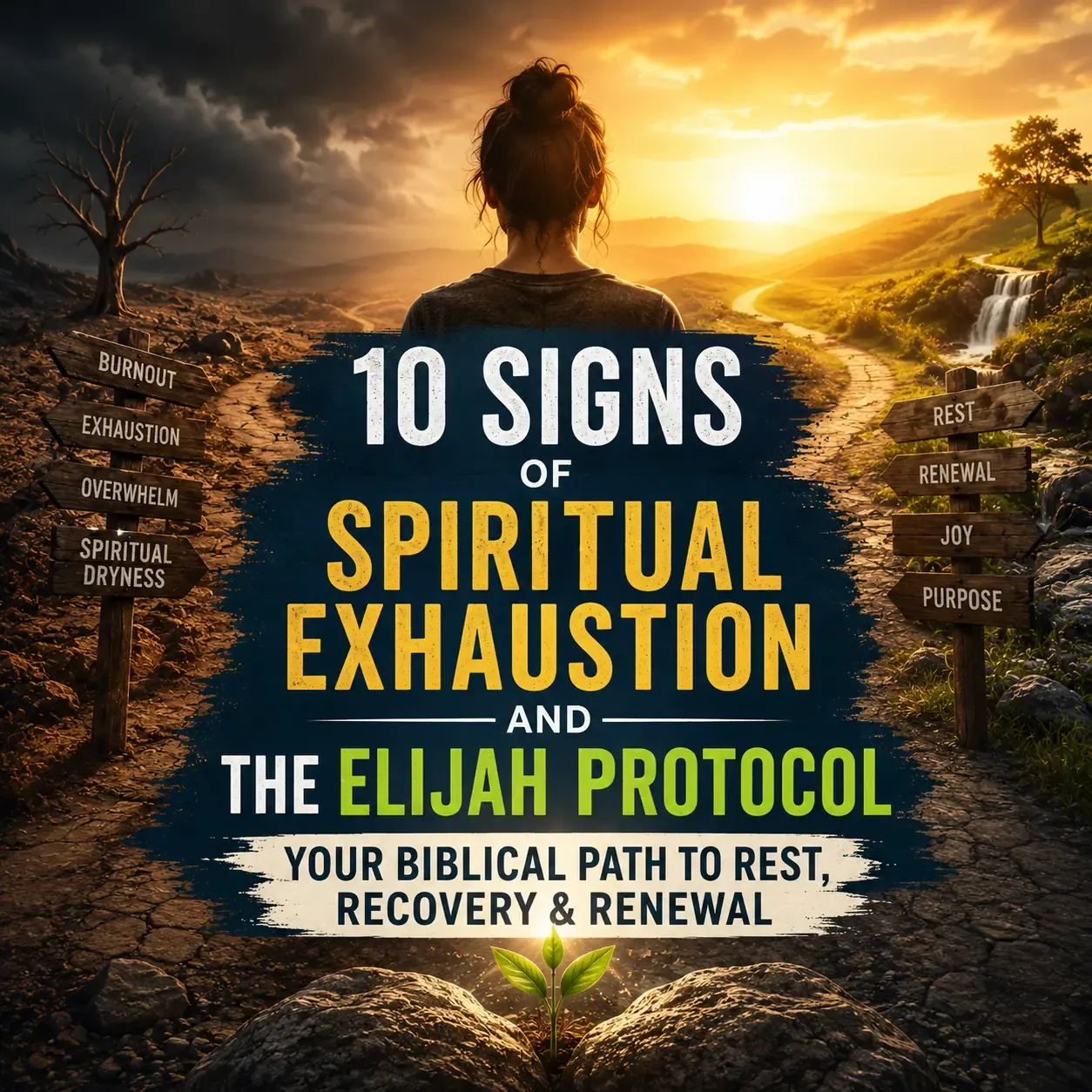
Ever feel like your soul is running on an empty tank even though you love God? You are likely facing signs of spiritual exhaustion, but you can find a way back to joy using a special biblical plan called the Elijah Protocol.
Being spiritually drained is not a fail in your faith. It is a biological signal from your body and brain that you have reached your human limits.

10 Signs of Spiritual Exhaustion You Should Never Ignore
When you are pushed past your capacity, your nervous system starts to shut down. This can lead to Christian burnout symptoms that affect your heart, mind, and body.
1. Feeling Emotionally Numb
You might feel like a "ghost" or just flat and one-dimensional. This happens when you are so overloaded that you can no longer process feelings.
2. Spiritual Dryness
This is when God feels very far away and your prayers feel like they go nowhere. You may feel spiritually tired and discouraged because your internal "well" has run dry.
3. Cynicism and Detachment
You might start to feel negative toward the people you are supposed to help. You begin to see others as objects or burdens rather than people made in God's image.
4. Constant Anxiety and Overwhelm
Small tasks can start to feel like giant mountains you cannot climb. This leads to emotional exhaustion and healing needs that rest alone might not fix.
5. Physical Tiredness That Won’t Go Away
Spiritual exhaustion often shows up in your body as headaches or trouble sleeping. You might feel physically weak even if you haven't been doing heavy lifting.
6. Losing Your Motivation and Joy
The things that used to make you excited now feel heavy and dull. You might find yourself just going through the motions to get the day over with.
7. Prayer Feeling Like Hard Work
When you are exhausted, even talking to God can feel like a chore. You might find it hard to concentrate or feel like you have nothing left to say.
8. Quickness to Anger
You might find yourself getting irritable or "snapping" at people more than usual. Like the prophet Jonah, you might even feel an "illogical rage" or bitterness about your life.
9. Thinking You Are All Alone
Exhaustion can make you believe the lie that you are the only one left doing the right thing. You might start to pull away from friends and community because you feel misunderstood.
10. A Desire to Give Up
In extreme cases, you might feel like the prophet Elijah when he sat under a tree and asked God to take his life. You might feel like your work has accomplished nothing and that "it is enough."

The Root Cause: The Temptation to Be Like God
Why do we get so tired? Often, it is because we give in to the ancient temptation to live without human limits.
In the Garden of Eden, the serpent tempted humans to "be like God." Today, we do this by trying to be all-powerful, all-knowing, and totally independent.
Burnout is what happens when we try to carry heavy weights that only God was meant to carry. We must remember that we are finite beings who need food, sleep, and help from others.
How to Recover Biblically Using the Elijah Protocol
When Elijah was at his lowest point, God didn't lecture him or tell him he was a failure. Instead, God used the Elijah Protocol to gently bring him back to life.
Step 1: Meet Your Physical Needs
The very first thing God did was send an angel to give Elijah a nap and a snack. Sometimes the most spiritual thing you can do is get proper sleep and a healthy meal.
Step 2: Practice Real Rest
Not all rest is equal. To heal a "blown" nervous system, you need low-demand, non-productive rest, like walking in nature or gentle creativity.
Learning what the Bible says about rest shows us that Sabbath is a command for our own good. Studies show that keeping a Sabbath helps you feel more accomplished and less anxious.
Step 3: Be Honest with God
God let Elijah vent his frustrations in a cave. Recovery begins when you name your internal state and tell God exactly how you feel without hiding it.
Step 4: Listen for the "Still Small Voice"
Elijah expected God to show up in a big wind, an earthquake, or a fire, but God was in a gentle whisper. You don't always need a huge miracle; you need quiet time to hear God's heart.
Using scriptures for spiritual renewal can help you focus your mind during these quiet moments.
Step 5: Find a Friend and a Helper
God gave Elijah a friend named Elisha to help him with his work. Healing happens in community because we were never meant to carry the load alone.

Practical Tools for Your Recovery
If you are trusting God during weary seasons, these steps can help speed up your healing.
- Set Boundaries: Learn to say "no" prayerfully so you don't try to "fix" everyone.
- Use Healing Scriptures: Read healing and recovery scriptures to remind your soul of God's promises.
- Practice Gratitude: Taking time to notice good things can actually help your brain recover from stress.
- Seek Support: Don't be afraid to talk to a counselor or a spiritual director.
FAQ: Common Questions About Spiritual Exhaustion
Is spiritual exhaustion a sin?
No, it is not a fail in your faith. It is a physical and psychological signal that you are a human who has reached your natural limits.
How long does it take to recover?
God gave Elijah a 40-day journey to get his strength back. Recovery takes time, and God is patient with the process.
Can I still pray when I feel exhausted?
Yes, but keep it simple. Sometimes the best prayer during difficult seasons is simply sitting in silence and letting God's presence comfort you.

Final Encouragement
You are not the Savior; you are called to point people to Him. You can find more biblical resources for healing and strength to help you on this journey. Take heart—God "restores my soul" and will lead you to a place of peace.
Key Statistics
Americans experiencing burnout
52%
More than half of U.S. workers report feeling burned out, showing how widespread emotional and mental exhaustion has become.
Source: APA Work in America Survey (2023)
Adults reporting stress-related fatigue
44%
Nearly half of adults say stress leaves them feeling fatigued or lacking energy.
Source: American Psychological Association Stress in America
Sleep recommendation for adults
7–9 hours per night
Adequate sleep is one of the most important biological factors in recovering from emotional and spiritual exhaustion.
Source: CDC Healthy Sleep Guidelines
Adults who feel lonely
49%
Almost half of adults report experiencing loneliness, a major contributor to emotional and spiritual depletion.
Source: Gallup Global Loneliness Report
Credible Sources
American Psychological Association · January 1, 2023
Provides current statistics on burnout prevalence and the effects of chronic stress on emotional well-being.
Centers for Disease Control and Prevention (CDC) · January 1, 2024
Supports the Elijah Protocol's emphasis on sleep and physical restoration as foundational to recovery.

About the Author
Editorial Team
Editorial Team
Daily Faith Path articles are prepared by the editorial team to help readers find scripture-centered guidance for healing, faith, prayer, and spiritual encouragement.
Expertise: Healing scriptures, Bible study resources, prayer guidance, devotional writing, Christian encouragement
Experience: The team researches scripture references, reviews surrounding biblical context, compares translation wording where useful, and updates articles to improve clarity, usefulness, and trust for readers.
Credentials: Editorial review, devotional writing, scripture study, content updating
This article is published by the Daily Faith Path editorial team to help readers use scripture carefully, prayerfully, and in ways that are practical for real-life seasons of illness, grief, waiting, and spiritual reflection.
Continue Reading
Related articles

October 7, 2026
12 Bible Verses About Hiding Money From Your Spouse
Explore 12 Bible verses about secret spending, hidden debt, financial honesty, confession, forgiveness, boundaries, and rebuilding trust in marriage.

October 6, 2026
15 Bible Verses for Couples Who Keep Fighting About Money
Money fights are rarely just about dollars. These 15 Bible verses help couples address spending, saving, debt, secrecy, unequal income, giving, and financial control with practical next steps and conversation questions.

October 5, 2026
Should You Tithe While in Debt? 11 Bible Passages to Study First
Should you tithe while in debt? Explore 11 Bible passages on tithing, debt, generosity, family responsibility, and giving according to your means—plus a practical plan for deciding what to do.